A Step-By-Step Guide To Choosing Your Espresso Coffee Machine Home
How to Choose an Espresso Coffee Machine Home A high-end espresso machine can take your coffee-making at home to the next level. How do you pick? There's a lot to consider—from measuring and grinding your own beans, to tamping and pressing properly to get the perfect espresso. Many of the tasks can be automated using semi-automatic and in some cases fully automated machines. Manual If you'd like to to make the best espresso at home, you'll need to invest in some top equipment. The most important part of the system is a well-designed and quality espresso maker that can handle pressure. This is where a handful of manufactures have really stripped the system down to make machines that don't even use boilers but instead rely on hand-pressure to create pretty decent shots. We've tested several of these and concluded that the Lelit Bambino Plus is one of the top. It's not cheap, but you're getting coffee machinery that will last for a long time and comes with 35 years of Lelit support and service to stand behind it. It is a bit heavy, but that's expected considering its build. It's got a retro-futuristic style that is sure to spark conversations. Breville Smart Grinder EK835 is another suitable option. It's not inexpensive, but it does a great job in what it does, and you'll be able grind your own beans. It's bigger than other grinders we've looked at, but it's because of its larger burrs and the fact that it's able to handle more than a standard set of burrs. It's easier to use than some of the models we looked at and comes with a long warranty. 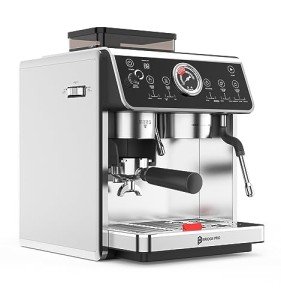 There are four types of espresso machines: Manual/Lever Semi-Automatic, Volumetric (sometimes known as Automatic) and Super-Automatic. Manual levers have a more traditional design and are more easy to use, but require more skill and knowledge to dial in and pull shots. Semi-automatics let you do the grinding and tamping yourself but they also have an electric pump that provides the same flow and pressure. You can alter the amount of espresso you want in your coffee by stopping the brewing. A majority of semi-automatics include steam wands that can create froth. Super-automatics are the best in convenience, with built-in grinders and tampers aswell as brew cycles. Semi-Automatic The difference between semi-automatic machines and fully automated machines comes down to how much control you want over the brewing process. Manual espresso machines rely on the barista to create pressure and pull the shot, which can be exhausting and requires a lot of practice. Fully automated machines do everything for you, making professional-quality espresso at the push of an button. However this convenience comes with an expense and these machines can be expensive to rent or purchase. A semi-automatic machine is the ideal alternative for those looking to have some control over their coffee making but don't have the time or skill level to be a barista. This type of machine removes the guesswork from making a shot by grinding the beans, compressing them into an hockey puck shape, and pushing hot water through them at just the right pressure to create an espresso. This espresso maker also lets you to steam milk and create latte arts. These types of espresso makers can be expensive and need a higher level of maintenance than fully automated machines. However, for those who don't have the money to purchase or rent an espresso machine that is fully automated, semi-automatic espresso makers are an affordable option. Fully automated espresso machines ensure an exact cup every time, with minimal effort. The machines can complete all the steps of making espresso with just one touch of a switch, from grinding the coffee beans to making the shot and steaming the milk. This is a very popular choice for cafes that need to serve many customers in a short time period and want simplicity of use. However these machines can be expensive and might not be an option for all cafes. If you're looking to purchase an espresso machine that is fully automated for your cafe, you should consider purchasing or renting two. One machine to handle high-volume times, and the second one for slower times. Pods Pod coffee machines allow you to create espresso-based drinks at the touch of a button. The capsules are made of coffee and powdered milk which is used to make the beverage. The best espresso pod machines offer consistently good results, are neat and quick, and create shots with a layer of crema. While pod machines won't give you the same level of control as bean-to-cup machines but they're an excellent choice for those who want to do away with grinding and tapping their own beans and who prefer convenience over quality. While they don't have the same flavor as freshly ground beans from a quality coffee grinder, the advancements in pod technology and a wide selection of coffee varieties make these models better than ever before. The machines make use of various coffee pods, however all share the same basic design and shape. The majority are covered in paper, they resemble tea bags that can be placed into a portafilter for brewing. Some are specifically designed to work with drip coffee makers and others are specifically designed for espresso machines. These are referred to as soft pods, and the latter are called Easy Serving Espresso (E.S.E) pods. It is important to check the list of compatible pods prior to buying a machine based on pods. A lot of these machines come with several options of pods, which means you can test different flavors and brands before you decide on your preferred. Some brands offer refillable pods to people who want to reuse their old ones. It's important to consider the cleaning and maintenance needs of your coffee maker, regardless of the model. While many bean-to cup machines require manual cleaning, washing the brewing and grinder mechanisms and regularly descaling them, several pod-based espresso machines have built-in self-cleaning functions that minimize hassle. Water The espresso machine is a powerful tool that makes use of high pressure to force water through finely packed, tightly ground coffee. The espresso shot is concentrated and is perfect for making cappuccinos. The Europeans particularly the Italians discovered this in the latter part of 1800 and used it to open an entire new world of cafe drinks. There are many methods to make espresso, however the basic principle is the same: heat the water to just below boiling, and then push it through the tightly packed grounds of a portafilter. The water is then poured into the container below the grouphead. This creates a strongly delicious, rich cup of espresso in just 2 minutes. Espresso machines work the same way, but their details vary slightly. Some machines employ a piston design that requires you to press down on the lever to create the necessary pressure (8 to 10 bar or 116 to 145 psi). best budget espresso machine employ an electrical pump to generate pressure. Others, including the more affordable home-based machines, rely on water and heated temperatures to achieve the same effect. The quality of the ingredients is crucial, no matter how the espresso machine is working. Start with a high-quality dark-roasted espresso bean. Then experiment with different grinds and tamping techniques to discover the perfect recipe for your espresso machine at home. Also, make sure you are using the correct water for your espresso machine. Ideally, you should use tap water with a moderate level of minerality. Minerals in water can assist you to get a smooth and balanced cup of espresso, while also preventing the formation of scale. La Marzocco has downloadable guidelines for coffee water that will assist you in determining the mineral content of your local water supply. As you become more familiar with using your espresso machine at home It's recommended to purchase additional accessories, like an espresso portafilter or a stainless steel tamper. These tools will enhance your coffee making techniques and give you a sense pride in the coffee you're now able to make at home.